

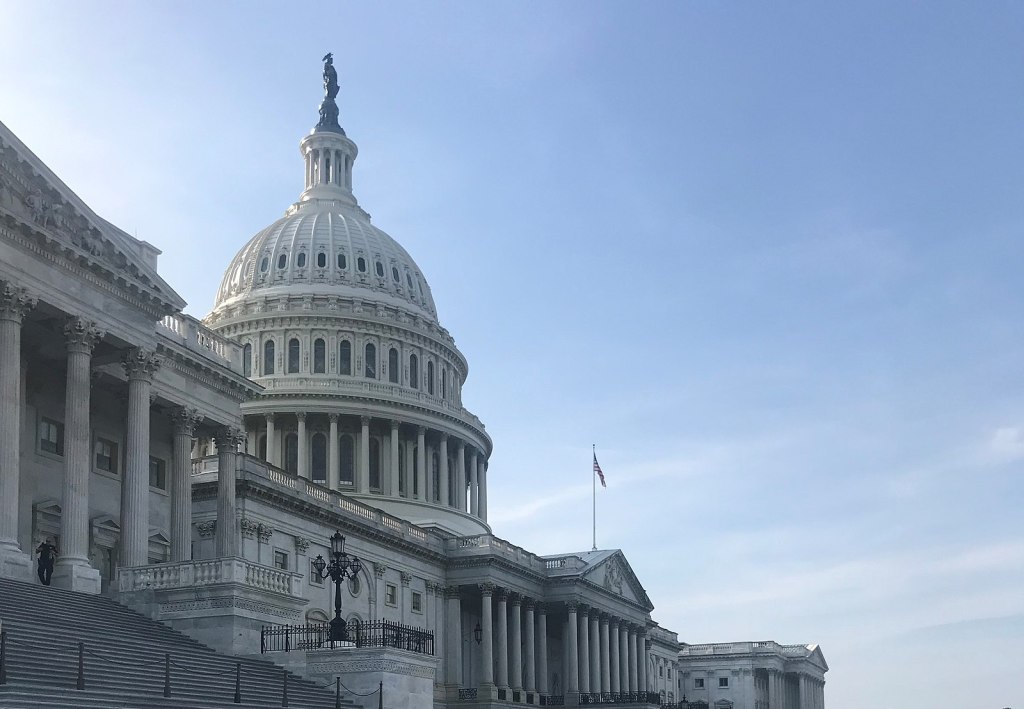
We are one month out from Election Day. Here’s where things stand, and who I think will win (as of right now), with regard to the presidential, House and Senate races:
– Presidential –
I believe this is going to be a very close race. Vice President Kamala Harris (D) will almost certainly win the national popular vote. But former President Donald Trump (R) has help from the Electoral College, just like he did in 2016 (and which helped him almost win in 2020).
My gut is optimistic on this one — I think Harris is going to win the Electoral College, but not by as much as Biden did in 2020. Somewhere between 276 to 290 EC votes, to Trump getting between 248 to 262 of them.
I fully expect Trump to contend the election results, too, which could make things feisty in the weeks after Election Day. Hopefully, none of the shenanigans he attempted in 2020 will be successful this time around…
– House –
It’s the Democrats’ to lose — a lot of factors are just in their favor this year. New York has seen some of its districts realigned since 2022 that favor Dems. Several other states have seen changes, too, including Alabama, Georgia, Louisiana and North Carolina.
With the renewed enthusiasm that Harris brought to the presidential race (and with Trump continuing to express hairbrained conspiracy theories that are turn-offs for independent voters), I expect a couple of GOP seats in California will flip to Democrats, too. Even Iowa, where all four congressional districts are Republican-held, has two seats that are considered “toss-ups” at the moment.
Polling also is in Democrats’ favor: the latest Economist/YouGov poll shows that, when participants were asked about their preference in the House race for their district, Democrats had a 3-point advantage over Republicans among registered voters.
Democrats have traditionally had to do much better than have a 3 percent advantage to win the House, due to gerrymandering. But that current advantage, coupled with the other points mentioned above, might just be enough to flip the currently narrowly-divided House of Representatives to them, giving Hakeem Jeffries the speakership chair.
– Senate –
The Senate, meanwhile, is going to probably flip, too, toward Republican control.
Dems (and independents caucusing with them) currently have 51 seats in the “upper chamber” of Congress, of which 23 of those seats are up for re-election or are becoming vacant. Republicans have 49 seats in the Senate, of which only 11 are involved in this election. That right there is an automatic advantage toward the GOP.
Then, you have to look at the ratings for each of those seats. The Democrats have worse ratings for more of their seats — two seats are considered “toss-ups” according to the Cook Political Report, and two others are considered “solid” or “lean” Republican. Meanwhile, the seats Republicans are defending? None of them are in “toss-up” status or lean toward Democrats, with all of them likely to be retained by Republicans.
There are some races to keep an eye on — Colin Allred (D) is catching up to Ted Cruz (R) in Texas, and the independent candidate Dan Osborn in Nebraska is polling well against his Republican opponent, too. But those are two very BIG IFs…and I’m just not seeing BOTH of those races going in Democrats’ favor, and even one of them winning is being overly optimistic.
So with Democrats losing between 2-4 seats, and gaining, AT BEST, two seats, it’s looking like they’ll have between 47 to 51 seats in the Senate come January — but the lower end of that range is more likely than the higher end.
I will try to update this prediction a week out from November 5. If you haven’t yet, please register to vote. Thanks for reading!
Featured image via Wikimedia


Leave a Reply